
Albert Einstein, Liberation, and STEM
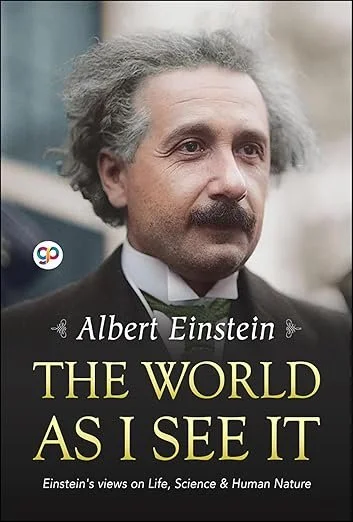
Image courtesy of Amazon
In his book essay, "The World as I See It," the German physicist Albert Einstein wrote: "The true value of a human being can be found in the degree to which he has attained liberation from the self."
Thinking of those words, “liberation from the self”, I see a practical application for those involved in STEM related activities.
Your growth in STEM increases when you're less focused on looking smart and more so on becoming capable in whatever you're doing. That's easier said than done because our ego wants to impress.
But that's what "liberation from the self" means in a learning environment: freedom from ego.
Freedom from the fear of being seen as wrong, behind, or imperfect.
The Ego Obstacle
In science, engineering, and technology, ego often slows learning because it makes mistakes feel dangerous.
Ego says, "If I ask a question, they'll think I'm not smart," or "If I fail a test, I'm not a STEM person."
But we know STEM doesn't come from perfection. It's built on iteration. It's usually doing things over-and-over until we get it right.
When we step back and examine breakthroughs, just about every breakthrough story includes:
confusion
wrong attempts
debugging
revisions
feedback
persistence
The problem isn't the mistakes. The problem is stopping short because we made one, or two, or three.
Were you aware that Thomas Edison, the inventor of the electric lightbulb, conducted thousands of iterations before he got it right? He once said: "I have not failed. I've just found 10,000 ways that won't work," highlighting his perspective on persistence and learning from failures.
Imagine if he gave up in shame?
What "Liberation" Looks Like For a Student
A student who is more liberated from ego does three powerful things:
1) They ask questions
Questions are not a sign of weakness. They are proof of engagement. People who learn fast are often the people who ask the most questions.
2) They treat failure as information
When something breaks, it's not a verdict; it's data. That's when "it didn't work" becomes a clue, not a personal insult.
3) They collaborate
STEM today is team-based. The future belongs to builders who can share ideas, accept feedback, and improve together.
A STEM Learning Rule
Here's a simple rule that creates healthier STEM spaces: In this space, we don't perform intelligence. We practice it.
That mindset shifts the culture toward progress, curiosity, and collaboration.
And it gives students permission to be beginners—without feeling small.
Although we're focused on STEM, Einstein's quote applies equally in other areas of our lives too. When you're not trapped by ego, you can learn faster, absorb feedback, collaborate with confidence, and try hard things without fear.
That's not only a STEM advantage, but that's also a life advantage.
So, here's a closing question for you to think about:
What would you try today if you weren't worried about looking imperfect?
Try it and see how that goes. If it worked for Edison, it could work for you too!

About the Author
Marc has been a Newsletter Content Contributor with Pink Space Theory since March 2023. Based in Northern California, he enjoys using his creativity to craft engaging STEAM articles that educate and inspire the families we serve. With a passion for storytelling and a keen interest in STEAM education, Marc helps make complex concepts accessible and exciting for young learners.